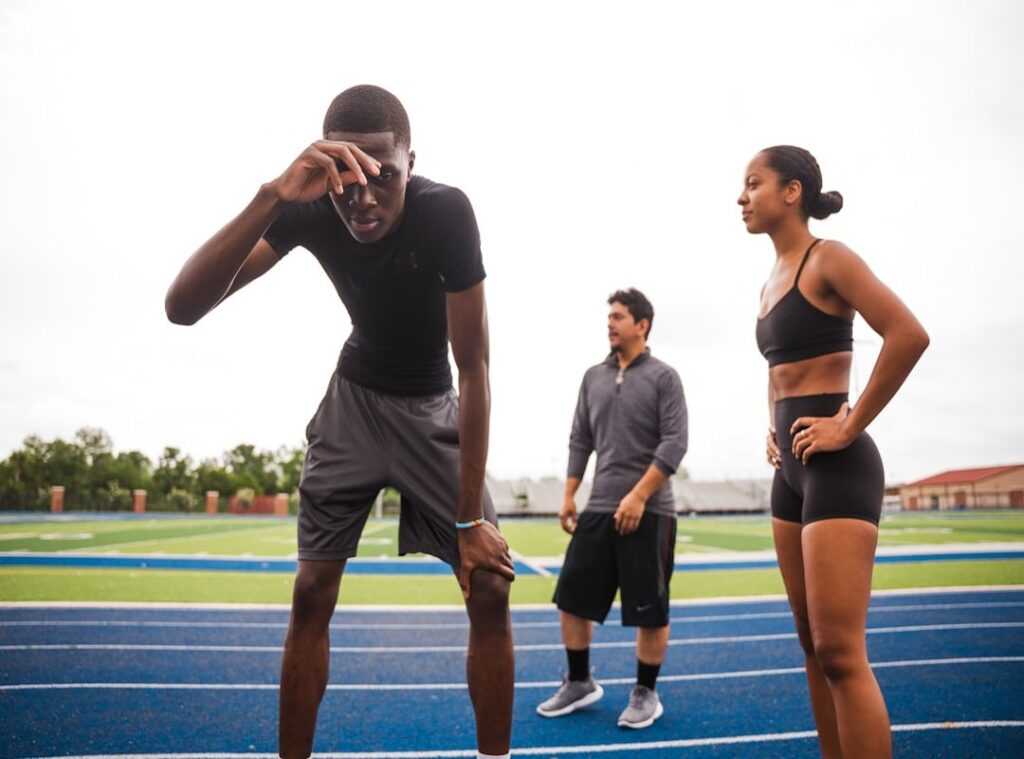
You ever feel like you’re just a split second too slow on the field? It’s frustrating. Many athletes focus on raw speed but miss out on developing true agility.
It’s not just about running fast. It’s about perception, reaction, and moving in every direction. I get it.
I’ve got a deep understanding of performance optimization and the science behind creating those “momentum moments” that can change the game. In this article, we’ll explore agility drills techniques that go beyond basic cone drills. You’ll find a system that builds both physical and cognitive quickness.
Ready to open up your potential?
Agility: More Than Quick Feet
Agility isn’t just about changing direction quickly. It’s more subtle. I learned this the hard way.
Training only Change of Direction Speed (CODS) is like practicing for a track race on a closed circuit. Sure, you’ll be fast, but throw in a few unexpected obstacles, and you’re toast. This is where Perceptual-Cognitive Ability comes in.
It’s about seeing, deciding, and reacting on the fly. Picture a race car not just speeding down a track but weaving through unpredictable city traffic. That’s the real test.
When I focused only on CODS, I hit a plateau. The missing piece? Training the mind to react.
Agility drills techniques should incorporate both elements. That’s the game-changer.
Want to boost performance? Check out these important techniques better endurance. It’s all about balance.
So why settle for half the equation when you can master both?
Building the Engine: Agility Drills
Creating the physical engine for agility isn’t about flashy moves. It’s about mastering foundational methods. Think about it.
What’s more important: looking good doing a drill or actually improving your performance? Spoiler alert. It’s the latter.
You need to understand why these drills matter before going wild with them.
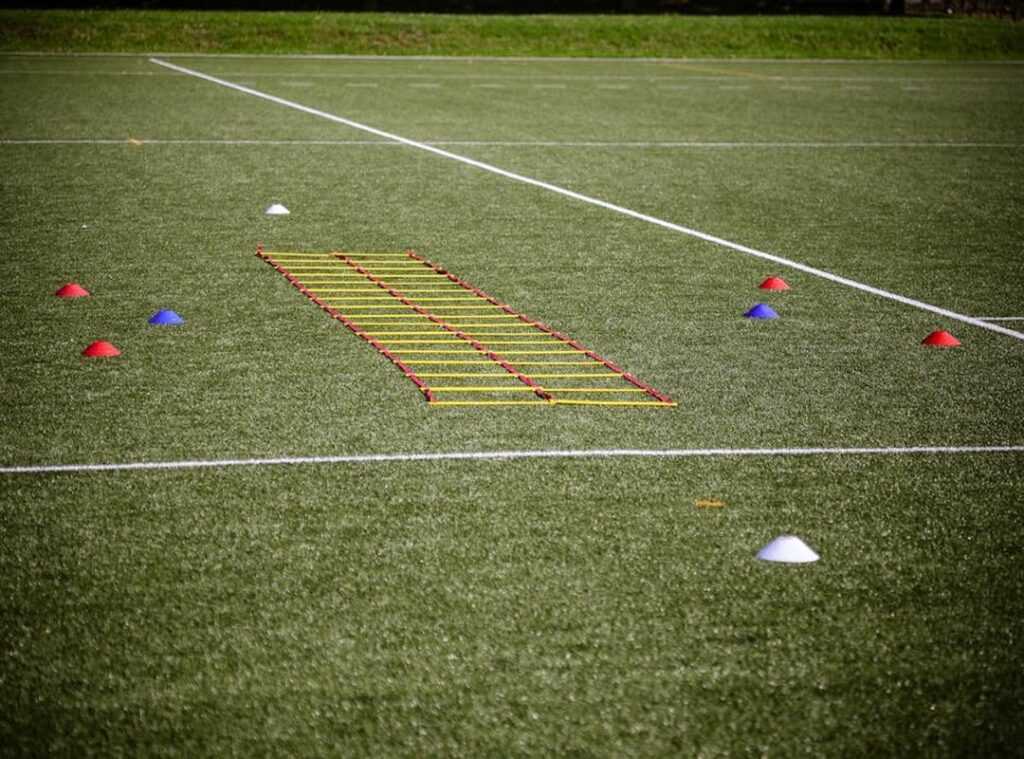
Ladder and hurdle drills? They’re staples. They aren’t just for fun; they sharpen foot speed and coordination.
One of my favorites is the Ickey Shuffle. It’s simple: step in, step out, repeat. Try it.
You’ll see how it challenges your neuromuscular efficiency. For hurdles, lateral hops are golden. Place hurdles in a line.
Hop sideways over each one. Feel the burn? That’s your body learning to move quickly and efficiently.
Cone drills might sound old-school, but they’re iconic for a reason. Take the T-Test. You sprint forward, shuffle sideways, and backpedal.
It’s all about changing direction quickly. Then there’s the Pro Agility drill (or the 5-10-5). It’s like the T-Test’s intense cousin.
Sprint five yards, touch the ground, reverse, and go ten yards, repeat. Both drills focus on acceleration and deceleration. And those 90-degree cuts?
They mimic real-life movements. You can’t skip these if you want to be truly agile.
Before layering complexity, master these basic mechanics. Ever seen those athletes who move with grace and ease? They didn’t start with complex tricks.
They began with these drills. If you’re curious about more exercises, check out the 8 best agility training exercises. Trust me, once you nail the basics, you’ll be on your way to agility greatness.
In the end, it’s about building a foundation. You wouldn’t build a skyscraper on a weak base, right? These drills are your base.
Stick with them. You’ll thank me later.
Reactive Agility Training: Forge Game-Winning Instincts
Think of reactive agility training as a software upgrade for your physical skills. It’s where athletes learn to adapt and excel in unpredictable environments. But what exactly is reactive agility?
It’s the ability to respond to a stimulus, like an opponent’s move or a ball’s unexpected flight path, that’s not pre-planned. This skill is key for athletes aiming to outmaneuver their competition.
Let me break it down with some practical agility drills techniques. First up, Partner Mirror Drills. In this drill, one athlete mirrors the movements of another.
It’s not just about copying but reacting to the subtle shifts (like in a dance-off with stakes). This builds the skill of reading human opponents in real time. You want to be quick on your feet, right?
This drill gets you there.
Next, try Auditory/Visual Cue Drills. Here, an athlete sprints, shuffles, or cuts based on a coach’s verbal command (think) “Left!” or “Right!” (or) a visual cue like a point or a colored tennis ball drop. It’s about sharpening your mind-body connection.
Imagine the game-changing moments when you instinctively pivot just in time.
And let’s not forget Small-Sided Games. These are sports-specific games, like 3v3 soccer, played in smaller areas. They’re not just fun but a powerhouse for training reactive agility.
The confined space forces you to think and act fast. Every move counts, every decision is key.
Want to dive deeper into building athletic prowess? Developing Core Strength Athletes is a great place to start. Core strength is foundational, and coupling it with reactive agility can take any athlete to the next level. So why wait?
Get out there, train smart, and watch your instincts evolve.
Agility: Tailor It to Your Sport
Let’s be real. Agility isn’t one-size-fits-all. The principle of training specificity is a game-changer.
Agility needs differ vastly between sports, and treating them the same is just lazy. Sure, running in circles might work for some, but if you’re serious about your sport, you need to get specific.
Take basketball players. They need short-area quickness. Cutting at sharp angles is key.
Imagine a reactive cone drill where a player reacts to a coach’s point. Drive to the basket or perform a crossover? The drill keeps you on your toes.
It’s not about running aimlessly. It’s about making those quick, decisive moves.
Now, let’s talk soccer. Here, agility is more about evading opponents and creating space. You can’t just run up and down the field.
How about a drill that combines a dribbling pattern with a reactive ‘mirror’ component? You’ve got a semi-live defender to deal with. the real test of agility drills techniques comes in. You need to think fast, move faster.
And then there’s tennis (or pickleball, if that’s your jam). Lateral movement is king. You need to recover to the center court like it’s second nature.
Picture a drill where you react to balls fed to different corners. Always return to the ‘T’. It’s about precision.
Pro tip: Don’t just train hard. Train smart. Tailoring your agility to match your sport isn’t just wise.
It’s important. So, ask yourself: Are you training for your sport, or are you just training?
Agility Training: Timing and Technique
Want to boost your game with agility drills techniques? Start with a changing warm-up. This fires up your nervous system, so you’re primed for action.
Do agility work before strength training. Why? Because your system needs to be fresh to nail those quick movements without risking injury.
Train 2-3 times a week on non-consecutive days. Your body needs recovery to improve. Start simple.
Master foundational drills first. Then, as you get better, add some reactive elements. Quality over quantity here.
Think of it like building a house (you) need a solid base before adding fancy decor.
Create Winning Moments
Being fast isn’t enough. You need a blend of foundational skills and game-like reactions. Why settle for speed alone?
Use agility drills techniques to craft your advantage. Stop training just speed. Train your agility.
Go create the moments that win games. Ready to redefine your game? Start today.
 Team Dynamics & Strategy Coordinator
Johnielos Hayhurst is the kind of writer who genuinely cannot publish something without checking it twice. Maybe three times. They came to athletic skills and techniques through years of hands-on work rather than theory, which means the things they writes about — Athletic Skills and Techniques, Momentum Moments, Pro Perspectives, among other areas — are things they has actually tested, questioned, and revised opinions on more than once.
That shows in the work. Johnielos's pieces tend to go a level deeper than most. Not in a way that becomes unreadable, but in a way that makes you realize you'd been missing something important. They has a habit of finding the detail that everybody else glosses over and making it the center of the story — which sounds simple, but takes a rare combination of curiosity and patience to pull off consistently. The writing never feels rushed. It feels like someone who sat with the subject long enough to actually understand it.
Outside of specific topics, what Johnielos cares about most is whether the reader walks away with something useful. Not impressed. Not entertained. Useful. That's a harder bar to clear than it sounds, and they clears it more often than not — which is why readers tend to remember Johnielos's articles long after they've forgotten the headline.
Team Dynamics & Strategy Coordinator
Johnielos Hayhurst is the kind of writer who genuinely cannot publish something without checking it twice. Maybe three times. They came to athletic skills and techniques through years of hands-on work rather than theory, which means the things they writes about — Athletic Skills and Techniques, Momentum Moments, Pro Perspectives, among other areas — are things they has actually tested, questioned, and revised opinions on more than once.
That shows in the work. Johnielos's pieces tend to go a level deeper than most. Not in a way that becomes unreadable, but in a way that makes you realize you'd been missing something important. They has a habit of finding the detail that everybody else glosses over and making it the center of the story — which sounds simple, but takes a rare combination of curiosity and patience to pull off consistently. The writing never feels rushed. It feels like someone who sat with the subject long enough to actually understand it.
Outside of specific topics, what Johnielos cares about most is whether the reader walks away with something useful. Not impressed. Not entertained. Useful. That's a harder bar to clear than it sounds, and they clears it more often than not — which is why readers tend to remember Johnielos's articles long after they've forgotten the headline.