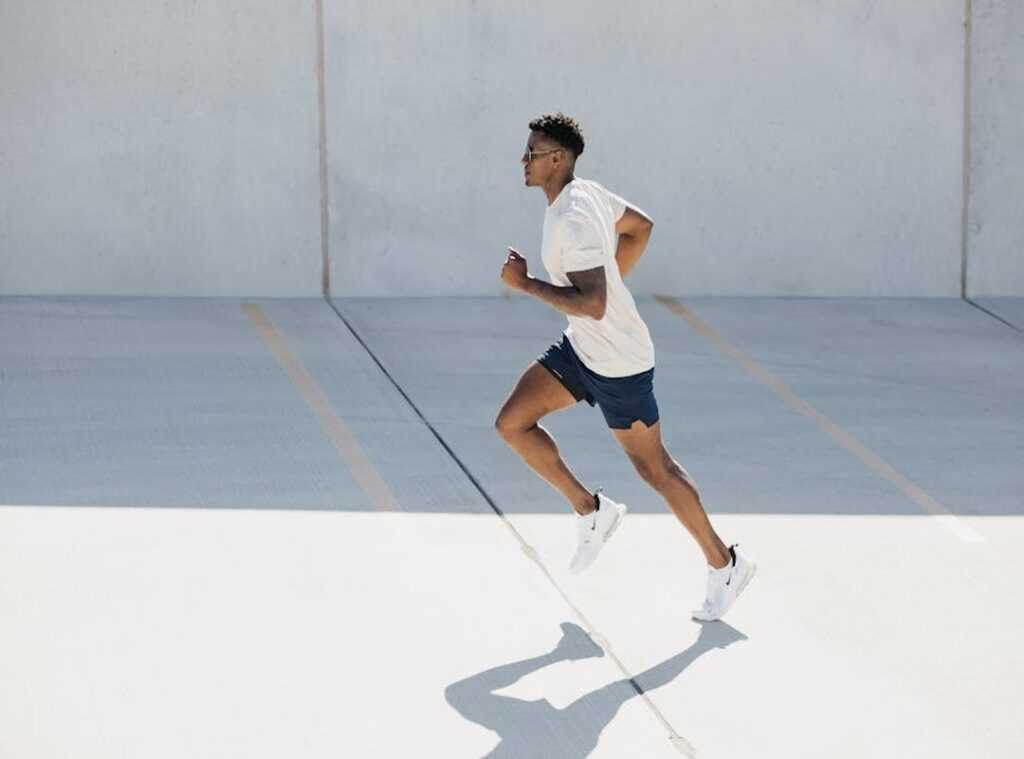

Every powerful stride, precise lift, and explosive jump is built on a foundation most people overlook: fundamental movement skills. This guide is designed to help you understand the essential physical abilities that underpin healthy, efficient, and high-performing movement. Many individuals unknowingly develop compensations and poor mechanics that lead to chronic pain, stalled progress, and preventable injuries. Drawing on established principles of biomechanics and athletic development, we break down movement as a hierarchy—starting with stability and control, then progressing toward strength, coordination, and complex athletic actions. You’ll learn how to identify weak links, assess your current capacity, and systematically build the skills your body was designed to master.
The Four Pillars: Stability, Mobility, Balance, and Coordination
Before you can sprint down a field, leap for a rebound, or deadlift your bodyweight, you need a foundation. Think of your body like a house: without a solid base, everything built on top becomes shaky. These four pillars clarify what that base really means.
Stability is the ability to control movement at a joint. In simple terms, it’s your capacity to resist unwanted motion. Your core bracing during a squat is a classic example. The goal isn’t stiffness everywhere (that would make you move like a robot), but controlled firmness where needed. Stability is the anchor that allows force to transfer efficiently.
Mobility is often confused with flexibility. Flexibility is passive—how far a muscle can be stretched. Mobility is active—how much of that range you can control with strength. If you can drop into a deep squat and stand back up smoothly, that’s mobility. If you can only reach that depth when someone pushes you there, that’s flexibility.
Balance is the ability to maintain your center of mass over your base of support.
- Static balance: holding a single-leg stance.
- Dynamic balance: staying controlled while stepping, cutting, or landing.
Coordination is the brain-body connection that sequences movement into fluid action. Catching a ball while running requires timing, rhythm, and precision working together.
Mastering these pillars strengthens your fundamental movement skills and turns effort into efficient performance.
Building Athleticism: Strength, Power, and Agility
Once foundational stability, mobility, coordination, and balance are in place, you can begin layering higher-order athletic qualities. This is where performance separates from participation.
Many programs jump straight to flashy drills (box jumps on day one—really?). That skips the architecture behind elite movement. True athleticism is constructed, not improvised.
-
Strength: The ability of a muscle or muscle group to exert force against resistance. Strength controls deceleration, absorbs impact, and forms the raw material for power. When an athlete lands from a jump, strength protects the joints. When they wrestle for position, strength stabilizes chaos. Without it, speed becomes reckless.
-
Power: The ability to exert maximum force in minimal time (Strength × Speed). This is explosion—sprinting off the line, elevating for a rebound, driving through a tackle. But here’s what most competitors overlook: power expression depends on technical efficiency. Two athletes may be equally strong; the one with cleaner mechanics converts more force into usable output (think sprinter versus gym lifter).
-
Agility: The ability to start, stop, and change direction efficiently while maintaining control. Agility lives in reaction. It integrates balance, coordination, and strength under time pressure. If you want a deeper breakdown, see how to improve agility and footwork for competitive advantage.
The interplay matters. Agility collapses without balance. Power plateaus without strength. Strength becomes unsafe without stability and mobility. And all of it evolves from fundamental movement skills refined under load and speed.
Pro tip: Train deceleration as aggressively as acceleration. Brakes win games.
The Unseen Skills: Mastering Rhythm and Spatial Awareness
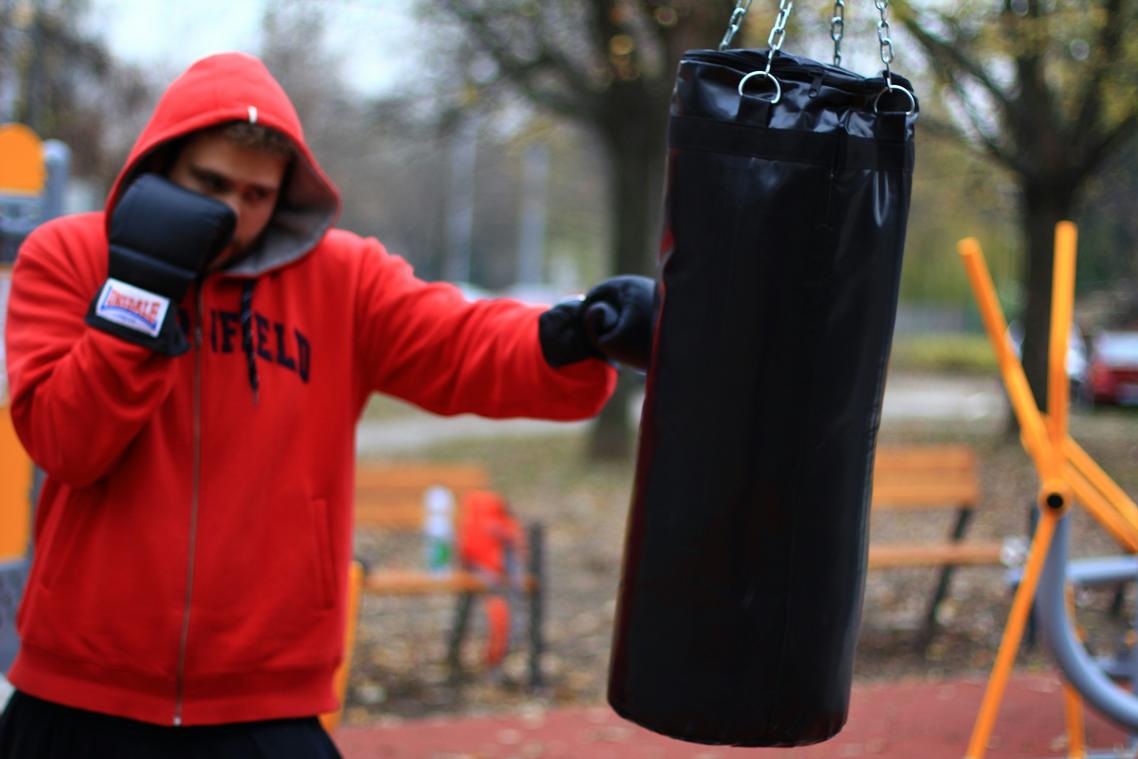
Beyond strength and speed lies something quieter—but just as powerful. Movement becomes art when rhythm and spatial awareness work together.
First, rhythm and timing refer to the ability to sequence movements in a coordinated, well-paced way. It’s why elite runners look effortless and why a perfectly timed jump shot feels smooth rather than forced. At its core, rhythm refines fundamental movement skills into efficient patterns that conserve energy (and make hard things look easy).
Then there’s spatial awareness, also called proprioception—the body’s internal sense of position and motion. Think of it as your movement “sixth sense.” It allows automatic adjustments mid-stride or mid-air without conscious thought. Ever caught yourself before tripping without looking down?
Together, these skills:
- Improve balance and coordination
- Reduce injury risk
- Enhance reaction speed
- Elevate overall performance
So what’s next? Start layering rhythm drills, balance challenges, and reactive exercises into training. Master the unseen—and the visible results follow.
A Practical Framework for Developing Your Movement Skills
From theory to practice, here’s a simple roadmap you can use this week.
Start with an assessment. Test your single-leg balance for 30 seconds per side, try an overhead squat to spot mobility limits, and hold a plank for core stability. If you’re shaky, that’s data, not failure (everyone wobbles at first).
Next, build progressively. Master alignment, breathing, and control before chasing load or speed. Don’t stack power onto dysfunction; that shortcut often backfires.
Then integrate. Yoga blends balance and mobility, plyometrics train power and coordination, while dancing sharpens rhythm and spatial awareness. Together, these reinforce fundamental movement skills.
Looking ahead, it’s reasonable to speculate that wearable tech will soon auto-adjust drills in real time, personalizing progress (speculation, but plausible given AI’s rise).
Pro tip: film your sessions monthly to track subtle gains.
Consistency compounds; over months, refinements create resilient, adaptable movers.
By mastering fundamental movement skills, athletes not only enhance their performance across various sports but also lay the groundwork for adopting the winning mindsets championed by elite coaches, as explored in our article on building those crucial mental frameworks – for more details, check out our Lessons from Elite Coaches on Building Winning Mindsets.
Build Strength from the Ground Up
You set out to understand how to move better without pain—and now you know the truth: lasting performance starts with mastering fundamental movement skills. When stability, mobility, balance, and coordination are ignored, compensation patterns take over, limiting progress and increasing your risk of injury. That frustration isn’t random—it’s a sign your foundation needs attention.
The good news? You can fix it. Assess your weakest links and begin integrating simple, targeted drills into your daily routine. Small, consistent improvements build a resilient, high-performing body. Start today and take control of how you move—because better movement unlocks everything else.
 Founder & Chief Executive Officer (CEO)
Zayric Veyland has opinions about team dynamics and strategies. Informed ones, backed by real experience — but opinions nonetheless, and they doesn't try to disguise them as neutral observation. They thinks a lot of what gets written about Team Dynamics and Strategies, Athletic Skills and Techniques, Rushisvili Performance Optimization is either too cautious to be useful or too confident to be credible, and they's work tends to sit deliberately in the space between those two failure modes.
Reading Zayric's pieces, you get the sense of someone who has thought about this stuff seriously and arrived at actual conclusions — not just collected a range of perspectives and declined to pick one. That can be uncomfortable when they lands on something you disagree with. It's also why the writing is worth engaging with. Zayric isn't interested in telling people what they want to hear. They is interested in telling them what they actually thinks, with enough reasoning behind it that you can push back if you want to. That kind of intellectual honesty is rarer than it should be.
What Zayric is best at is the moment when a familiar topic reveals something unexpected — when the conventional wisdom turns out to be slightly off, or when a small shift in framing changes everything. They finds those moments consistently, which is why they's work tends to generate real discussion rather than just passive agreement.
Founder & Chief Executive Officer (CEO)
Zayric Veyland has opinions about team dynamics and strategies. Informed ones, backed by real experience — but opinions nonetheless, and they doesn't try to disguise them as neutral observation. They thinks a lot of what gets written about Team Dynamics and Strategies, Athletic Skills and Techniques, Rushisvili Performance Optimization is either too cautious to be useful or too confident to be credible, and they's work tends to sit deliberately in the space between those two failure modes.
Reading Zayric's pieces, you get the sense of someone who has thought about this stuff seriously and arrived at actual conclusions — not just collected a range of perspectives and declined to pick one. That can be uncomfortable when they lands on something you disagree with. It's also why the writing is worth engaging with. Zayric isn't interested in telling people what they want to hear. They is interested in telling them what they actually thinks, with enough reasoning behind it that you can push back if you want to. That kind of intellectual honesty is rarer than it should be.
What Zayric is best at is the moment when a familiar topic reveals something unexpected — when the conventional wisdom turns out to be slightly off, or when a small shift in framing changes everything. They finds those moments consistently, which is why they's work tends to generate real discussion rather than just passive agreement.