
Success in sports doesn’t happen by accident. It’s built through intentional Momentum Moments, refined athletic skills, smart team strategies, and a relentless focus on performance optimization. If you’re here, you’re likely looking for practical ways to elevate performance—whether that means sharpening technique, strengthening team cohesion, or gaining a competitive edge when it matters most.
This article breaks down the core elements that drive consistent results: how athletes can improve mechanics and decision-making, how teams can align around clear strategies, and why building trust in teams is the foundation of sustained success. You’ll find insights grounded in proven performance principles, real-game dynamics, and evidence-based training approaches used across competitive environments.
Our goal is simple: deliver actionable, experience-backed guidance that helps you move from potential to performance—individually and collectively—so you can compete with clarity, confidence, and measurable improvement.
The Twin Pillars of High-Performance Teams
Talent alone doesn’t win. Time and again, skilled teams stall because trust is fragile and collaboration is accidental. So what’s missing?
Pillar One: Credibility in Action
First, credibility means consistent follow-through—doing what you said you’d do, especially under pressure. In elite settings, split-second hesitation can cost everything (think of a relay team fumbling the baton). Pro tip: document commitments publicly to reinforce accountability.
Pillar Two: Collaborative Precision
However, trust without structure fades. Effective collaboration requires:
- Clear decision rights
- Shared language for feedback
- Debriefs after key moments
Ultimately, building trust in teams transforms individual skill into synchronized execution—where output exceeds raw talent.
The Bedrock of Influence: Forging Your Personal Credibility
Personal credibility isn’t built in a single grand gesture. It’s forged in daily choices—excellence vs. excuses, consistency vs. unpredictability, ownership vs. blame.
Deliver with Excellence (Competence)
Competence means more than understanding your job description. It’s the difference between doing the minimum and delivering measurable impact. Think of two athletes: one shows up to practice, the other studies game film, refines technique, and tracks performance metrics. Same role, different results.
- Average output earns approval.
- Exceptional output earns influence.
Some argue that being “good enough” keeps expectations manageable. But in competitive environments, results—not intentions—shape reputation. According to a Harvard Business Review analysis on high performers, consistent top contributors are more likely to be trusted with leadership opportunities (HBR, 2018). Proof beats promises every time.
Be the Dependable Variable (Consistency)
If excellence is power, consistency is stability. Imagine a teammate who delivers brilliant work… sporadically. Now compare that to someone steady and predictable. Which one would you rely on in a high‑stakes moment?
Reliability reduces friction and strengthens building trust in teams. Meeting deadlines and honoring commitments turns you into the “safe pair of hands.” (And in pressure situations, safe is powerful.)
Own Your Actions (Character)
Mistake made. Two paths:
- Deflect blame.
- Admit, correct, improve.
Ownership accelerates respect. Transparency signals maturity. Research from the American Psychological Association shows accountability increases perceived trustworthiness in professional settings (APA, 2020).
Credibility isn’t charisma. It’s alignment between words and actions—repeated until others stop questioning and start depending.
Bridging the Gap: From Individual Trust to Team Cohesion
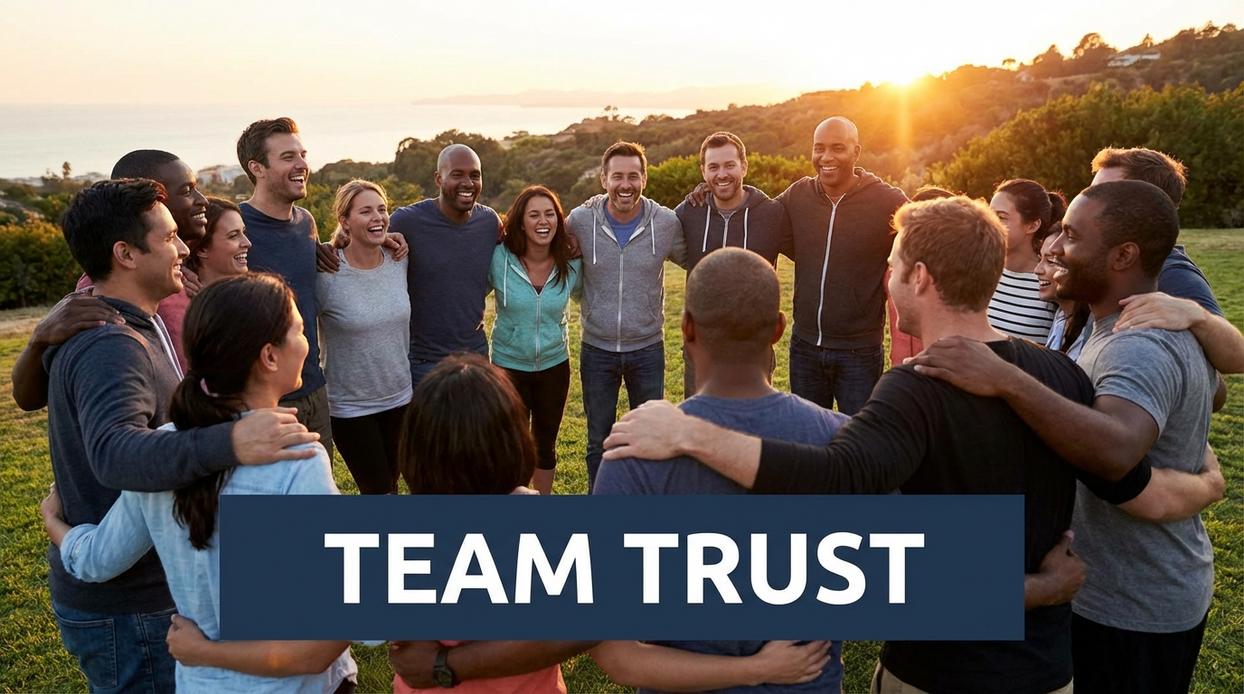
High-performing teams don’t happen by accident. Instead, they’re engineered—through clarity, structure, and shared accountability.
Engineer Psychological Safety
First and foremost, psychological safety—defined as a shared belief that it’s safe to take interpersonal risks—must be intentional. Research from Google’s Project Aristotle found it to be the single biggest predictor of team effectiveness (Google re:Work). Practically speaking, this means leaders model vulnerability, invite dissenting opinions, and respond to mistakes with curiosity rather than blame. When a teammate can say, “I don’t understand,” without fear, performance accelerates (and meetings get a lot more honest).
Rally Around a Shared Mission
However, safety alone isn’t enough. Teams also need a compelling mission. A goal becomes powerful when members understand not just the “what,” but the “why.” For example, elite sports teams constantly revisit their championship vision before refining tactics—similar to evaluating offensive vs defensive strategies when to adapt your game plan. Alignment meetings, visible scoreboards, and clearly defined KPIs transform abstract ambition into measurable progress. Consequently, effort feels purposeful rather than transactional.
Master the Art of the “Handoff”
Next, focus on transitions. A “handoff” is the structured transfer of responsibility, information, or tasks between teammates. In aviation and healthcare, checklists dramatically reduce errors during handoffs (World Health Organization). Similarly, teams benefit from documented workflows, deadline confirmations, and recap messages. Pro tip: always clarify what “done” looks like before passing work forward.
Implement Constructive Feedback Loops
Finally, establish recurring feedback cycles. Structured debriefs, peer reviews, and one-on-ones create momentum. Frame feedback as fuel for growth, not personal critique. Over time, this normalizes learning, strengthens resilience, and supports building trust in teams at scale.
In short, cohesion is built through systems. When safety, mission, transitions, and feedback align, teams don’t just collaborate—they win together.
Actionable Drills for Peak Team Performance
High-performing teams don’t rely on motivation alone; they rely on repeatable drills. The difference between average and elite execution often comes down to structure. Let’s compare what works with what merely sounds good.
1. The After-Action Review (AAR)
Some teams finish a project and immediately move on. Others pause for a structured debrief. That’s the A vs. B scenario.
Team A: “Great job, everyone.” (And… onto the next sprint.)
Team B: Conducts an After-Action Review, asking three questions:
- What was supposed to happen?
- What actually happened?
- What will we do differently next time?
An After-Action Review (AAR) is a blameless evaluation focused on process, not people. In contrast to finger-pointing sessions, it institutionalizes learning. Over time, this rhythm compounds small improvements into major performance gains (think less reality TV drama, more championship locker room).
2. Role-Clarity Mapping
Next, consider ambiguity versus alignment. When roles are vague, decisions stall. When ownership is clear, momentum builds.
Role-Clarity Mapping is a workshop where responsibilities and decision rights are explicitly defined. As a result, friction drops and accountability rises. Instead of “I thought you had it,” you get decisive action. Pro tip: document ownership visually so gaps and overlaps become obvious.
3. The “Assist” Mentality
Finally, compare individual stats to team wins. The “Assist” Mentality rewards proactive support, not solo heroics. By tracking and celebrating assists, teams reinforce collective success. Moreover, this habit strengthens collaboration and contributes directly to building trust in teams.
In the end, structured reflection, defined ownership, and shared support outperform raw talent alone.
By fostering an environment of transparency and open communication, teams can cultivate trust that not only enhances collaboration but also aligns with the Common Habits That Separate Elite Performers from the Rest.
From Skilled Players to a Winning System
You now have a clear framework for building two essentials: credibility and culture. I learned the hard way what happens without them. I once coached a roster packed with talent, yet we avoided hard conversations and skipped reflection. We lost games we should’ve dominated. The lesson? A team without trust is coworkers in jerseys.
building trust in teams requires disciplined habits, not speeches.
- Run After-Action Reviews.
- Reward vulnerability as much as results.
These strategies work because they tap into shared purpose and connection. Try one drill this week—what could change?
You came here looking for practical ways to elevate performance—whether through sharper athletic skills, smarter strategies, or stronger team cohesion. Now you have a clearer understanding of how Momentum Moments, refined technique, and intentional leadership come together to create consistent competitive advantages.
The real difference-maker isn’t talent alone. It’s discipline in execution, clarity in roles, and a commitment to building trust in teams so every player moves with confidence and purpose. Without that foundation, even the most skilled athletes struggle to perform under pressure. With it, teams communicate faster, adapt smarter, and win more often.
Now it’s time to take action. Start applying one performance optimization strategy in your next training session. Reinforce communication habits. Audit your current game plan. Small adjustments, executed consistently, create measurable gains.
If you’re serious about unlocking peak performance and eliminating the gaps holding your team back, take the next step today. Explore proven strategies trusted by competitive athletes and performance-driven teams—then put them into action and see the difference for yourself.