
If you’re searching for a faster, more effective way to build endurance, burn fat, and elevate athletic performance, you’re likely curious about high intensity interval training benefits and whether they truly live up to the hype. With so many workout methods competing for attention, it can be difficult to separate proven results from fitness trends.
This article breaks down exactly how high intensity interval training (HIIT) impacts speed, stamina, power, and overall conditioning. We’ll explore how short bursts of maximum effort can trigger measurable improvements in cardiovascular health, metabolic efficiency, and athletic skill development—while also supporting smarter recovery and performance optimization.
Our insights are grounded in current sports science research and performance data used by elite coaches and trainers. By the end, you’ll understand not just the benefits, but how to apply HIIT strategically to maximize results and avoid common mistakes.
Unlock Peak Performance in Less Time
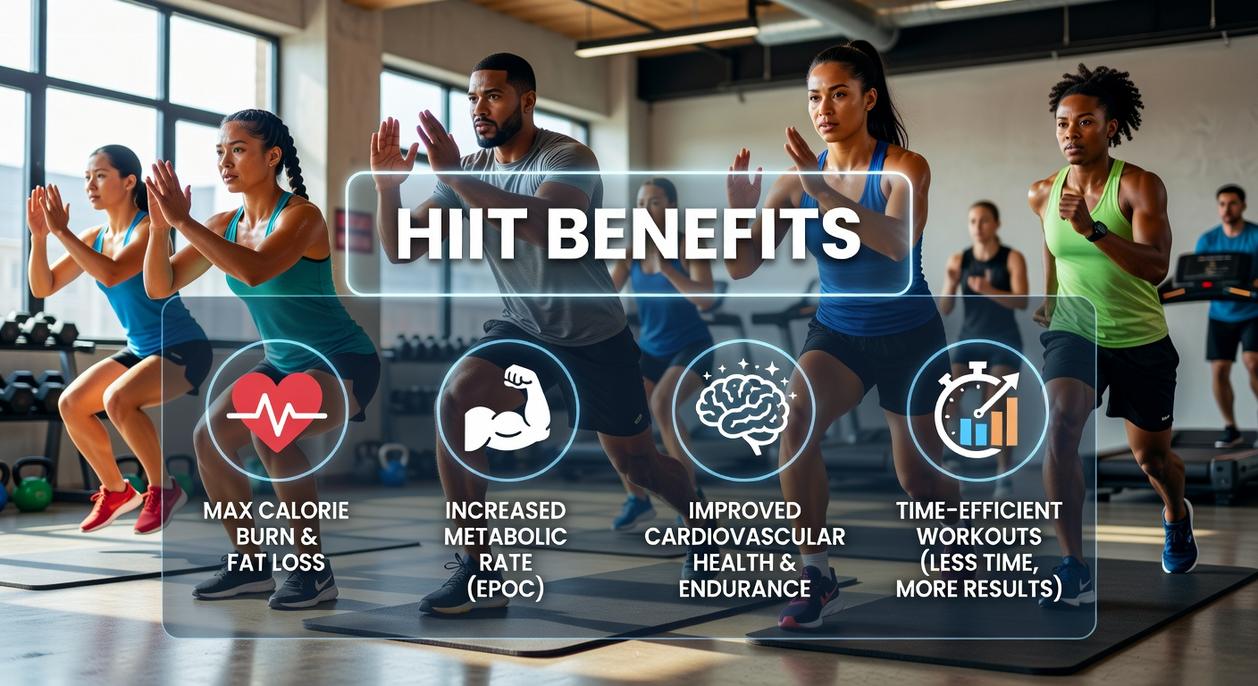
High-Intensity Interval Training (HIIT) alternates short, all-out efforts with structured recovery periods, pushing both aerobic and anaerobic systems in a single session. Research shows HIIT can improve VO2 max and insulin sensitivity in weeks (Gibala et al., 2012). The real high intensity interval training benefits include:
- Increased mitochondrial density for sustained energy
- Elevated post-exercise oxygen consumption, meaning you burn calories even at rest
- Sharper mental resilience under fatigue
These condensed sessions often last 20–30 minutes, making them ideal for busy athletes battling plateaus. Yet HIIT’s measurable gains make it truly powerful.
How HIIT Rewires Your Metabolism for Maximum Calorie Burn
Incorporating High-Intensity Interval Training into your routine can not only boost your performance on the ice but also enhance your skills in sports like Sffarehockey, where agility and endurance are key to success.
You finish a HIIT session drenched in sweat, lungs burning, heart pounding like a drum in your chest. Yet the real magic starts after you rack the weights. This is the Afterburn Effect, formally called Excess Post-exercise Oxygen Consumption (EPOC)—the elevated rate at which your body uses oxygen to restore itself to baseline. In simple terms, your engine keeps revving long after you’ve stepped off the floor. Research shows intense intervals can elevate calorie burn for hours post-workout (American Council on Exercise), turning recovery into a silent furnace.
Meanwhile, those all-out sprints trigger a sharp hormonal response. Growth hormone—crucial for muscle repair and fat metabolism—spikes in response to high intensity efforts (Journal of Endocrinological Investigation). More muscle, in turn, means a higher resting metabolic rate.
Then there’s mitochondrial biogenesis—the creation of new mitochondria, the tiny “power plants” inside your cells. HIIT stimulates this process, improving your body’s ability to convert oxygen into usable energy. Think of it as upgrading from a flickering bulb to stadium lights.
In contrast, a 45-minute steady jog feels steady and rhythmic, but a 20-minute HIIT session often produces comparable or greater metabolic disruption in less time. That efficiency is why many athletes praise high intensity interval training benefits for performance and fat loss.
Forge Cardiovascular Endurance in Minutes, Not Hours
Boosting VO2 Max: Pushing your limits in short bursts is one of the fastest ways to increase your VO2 max, the gold-standard measure of how efficiently your body uses oxygen. When you train near your peak effort, your heart and muscles adapt quickly, extracting and delivering more oxygen with each breath. The payoff? You build endurance in minutes, not marathon-length sessions with measurable performance gains.
Heart Health Optimization: Short, intense intervals strengthen cardiac muscle, increasing stroke volume—how much blood your heart pumps per beat. A stronger stroke volume means your heart can pump more with less effort, often lowering resting heart rate over time. According to research published in the Journal of Physiology, interval training significantly improves VO2 max and cardiac function.
Blood Pressure and Circulation: Studies show interval-based workouts can reduce systolic and diastolic blood pressure in as little as 8–12 weeks, enhancing vascular flexibility and circulation. That’s one of the clearest high intensity interval training benefits for long-term heart health.
Skill Translation: Greater cardiovascular efficiency means you can:
- Maintain pace late in a race
- Dominate the final quarter of a game
- Recover faster between explosive plays.
Maximum Results, Minimum Time
If you’re short on time, high-intensity interval training (HIIT) delivers measurable returns fast. Research published in the Journal of Physiology shows that 15–20 minutes of HIIT can improve cardiovascular fitness similarly to 45–60 minutes of steady-state cardio. In other words, you can get comparable endurance gains in less than half the time (yes, really).
The magic lies in intensity. A simple structure—30 seconds all-out effort, 30 seconds rest, repeated for 10–15 rounds—keeps your heart rate elevated while maximizing output. That’s just 15 minutes. Studies from the American College of Sports Medicine confirm that these short bursts drive significant high intensity interval training benefits, including improved VO2 max and insulin sensitivity.
Of course, some argue longer workouts build a stronger aerobic base. Fair point. However, when consistency is the goal, shorter sessions win. You’re far more likely to complete a 20-minute lunch-break circuit or quick morning session than skip training entirely. For added variety, rotate movements inspired by strength and conditioning drills for off season success (https://rushisvili.com/strength-and-conditioning-drills-for-off-season-success/). Pro tip: schedule HIIT like a meeting—non-negotiable and on the calendar.
Creating “Momentum Moments” for Mental Fortitude
Every brutal sprint, every final rep you want to quit—that’s a Momentum Moment. It’s the split second where discomfort meets decision. Choose to push through, and you’re not just training muscles; you’re building psychological resilience that carries into competition, career pressure, and everyday stress (yes, even that Monday morning meeting).
HIIT is especially powerful for breaking through plateaus because its intensity forces adaptation. When your body thinks it’s reached its limit, your mind learns it hasn’t. Over time, that rewires your response to challenge. The high intensity interval training benefits go beyond conditioning—they sharpen grit, focus, and recovery speed.
There’s also a biochemical payoff. High-intensity bursts trigger endorphin release, improving mood and reducing stress, according to the Mayo Clinic. That post-workout clarity? It’s real.
What’s in it for you?
- Greater mental toughness under pressure
- Faster physical and cognitive adaptation
- Elevated mood and sharper focus
Pro tip: When it burns, label it a Momentum Moment. Your brain listens.
Smart HIIT Without Burnout
Back in 2022, after three months of testing different protocols, one lesson stood out: more is not better. High-intensity intervals deliver serious high intensity interval training benefits, but they also tax your nervous system. Instead, cap sessions at two to three per week so muscles and connective tissue can rebound. Meanwhile, layer in lower-intensity skill work. Some argue daily HIIT builds grit; however, by week four most athletes show declining power and poor sleep. Listen for red flags: lingering soreness, irritability, stalled times. Adjust intensity to match the day (your body is not a robot). Period.
Short on time and stuck on a plateau? You’re not alone. Fortunately, HIIT is a proven way to boost metabolic rate, strengthen cardiovascular health, and sharpen mental toughness in minutes, not hours. In other words, high intensity interval training benefits show up fast when effort meets smart recovery.
Here’s how to start next week:
- Warm up for 3 minutes.
- Alternate 30 seconds all-out effort with 60 seconds light movement for 10 minutes.
- Cool down and hydrate.
Because intensity drives adaptation and recovery locks it in, one focused 15-minute session can reignite progress. Consistency turns effort into explosive athletic gains. Quickly.
Take Your Performance to the Next Level
You came here looking for practical ways to sharpen your athletic edge, improve conditioning, and maximize every training session. Now you understand how structured programming, smarter recovery, and high intensity interval training benefits can directly impact your speed, endurance, and overall performance.
The real pain point isn’t effort — it’s wasted effort. Training hard without a focused strategy leads to plateaus, burnout, and inconsistent results. When you apply proven techniques with intention, every rep and every drill moves you closer to peak performance.
Now it’s time to act. Choose one performance area to optimize this week — speed, stamina, or strength — and implement a structured plan built around proven methods. Athletes who follow data-driven, performance-tested systems consistently outperform those who guess.
If you’re ready to stop spinning your wheels and start seeing measurable gains, commit to a smarter training approach today. Push with purpose, track your progress, and elevate your game starting now.